Matrimonial Biodata
Matrimonial Biodata Format - Free Template for Shaadi & Marriage
Create a complete matrimonial biodata (shaadi biodata) for families, marriage bureaus, and matrimony portals. Free, professional templates - no signup, no watermark.
What Is a Matrimonial Biodata?
A matrimonial biodata - also called a shaadi biodata, marriage biodata, or wedding biodata - is the formal introduction document used in the Indian arranged marriage process. It is the first document exchanged between two families, or submitted to a marriage bureau or matrimony website, when a candidate is looking for a life partner.
The terms "matrimonial biodata," "shaadi biodata," and "marriage biodata" all refer to the same document - different communities and regions in India use different names, but the purpose and structure are identical. You may also hear it called a "shadi biodata" or "vivah biodata" in North India, and a "lagnacha biodata" in Maharashtra.
Unlike a job resume that focuses on professional skills, a matrimonial biodata format covers the candidate's complete personal profile - who they are as a person, their family background, their educational and professional status, their astrological details (for Hindu families), and what kind of life partner they are looking for. You can learn more about the differences on our how to make a biodata guide.
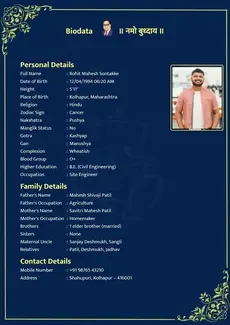
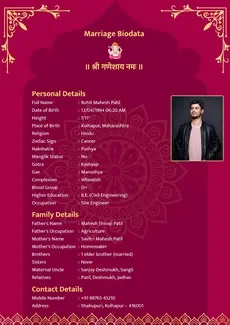
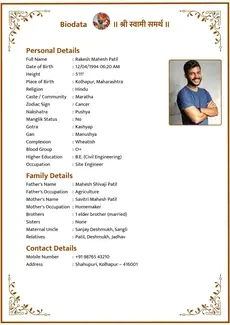
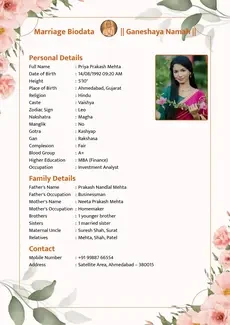
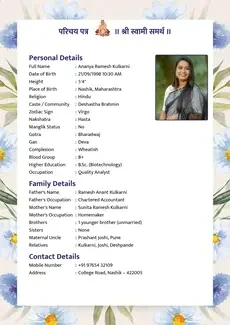
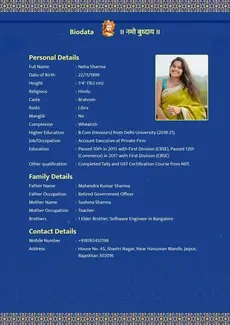
Sample matrimonial biodata templates - free to customise and download
Standard Matrimonial Biodata Format
Whether you are creating a shaadi biodata for a boy or girl, for a Hindu, Muslim, Marathi, or any other community, the core structure of a matrimonial biodata follows this standard format:
Personal Information
Name, date of birth, time of birth, place of birth, height, weight, complexion, blood group, marital status.
Astrological Details (Hindu/Marathi Biodata)
Rashi, Nakshatra, Gotra, Kul, Manglik/Amanglik status, horoscope availability. See our Hindu marriage biodata format for full details.
Educational Qualification
Highest degree, college/university name, year of passing. Any certifications.
Professional Details
Job title, employer name, location, annual income. For business owners - business type and scale.
Family Background
Father and mother names and occupations, siblings' details, family type, native place, community.
Lifestyle & Interests
Diet, hobbies, languages, values, religious practice level.
Partner Expectations
Preferred age range, education, community, location, lifestyle preferences.
Contact Details
Parent's phone number and email address for initial contact.
Where Is a Matrimonial Biodata Used?
👨👩👧 Family-to-Family Proposals
The most traditional use - when a relative, friend, or well-wisher suggests a match. The biodata is shared via WhatsApp or in person as a printed document.
🏛️ Marriage Bureaus & Local Matchmakers
Marriage bureaus and community matchmakers (often called "lagna julmak" in Marathi or "rishta agent" in Hindi) collect biodata from candidates and circulate them among potential matches.
🌐 Matrimony Websites
Sites like Shaadi.com, JeevanSaathi, BharatMatrimony, and community-specific portals use biodata information to create online profiles. Having a ready biodata makes it faster to fill these.
🛕 Community & Temple Events
Many communities organise community marriage fairs or temple-based matchmaking events where biodata is collected and circulated among families present.
Matrimonial Biodata Tips for a Strong First Impression
- Keep it to one A4 page. A concise biodata gets read completely. A long one gets skimmed or set aside.
- Lead with a recent, clear photo. The photograph is always the first thing noticed. Invest in a good one.
- Match your biodata format to your community. A Marathi lagnacha biodata should include gaav and kul; a Hindu biodata must include Rashi and Manglik status.
- Be specific about profession and income. Vague phrases like "in service" without specifics leave the other family guessing.
- Partner expectations should be welcoming. Open, positive expectations attract more interested families.
- Proofread before sharing. Spelling errors or wrong facts create lasting bad impressions.
Explore Specific Matrimonial Biodata Formats
👨 Matrimonial Biodata for Boy
Professional format with all groom-specific fields.
👩 Matrimonial Biodata for Girl
Elegant format for brides with education and lifestyle fields.
☪️ Muslim Matrimonial Biodata
Nikah biodata format with religious and community fields.
🖊️ Free Online Biodata Maker
Create your shaadi biodata online in under 5 minutes.
Create Your Matrimonial Biodata Free - Download in Word or PDF
No watermark. No signup. Professional shaadi biodata ready to share in minutes.
Create Shaadi Biodata Free →